Interview with Anna Ullrich
while preparing for EVI LICHTUNGEN in Hildesheim 22–25 JAN 2026.
INTERVIEW BY by Morvarid Arjmand
PUBLISHED 13 Jan 2026
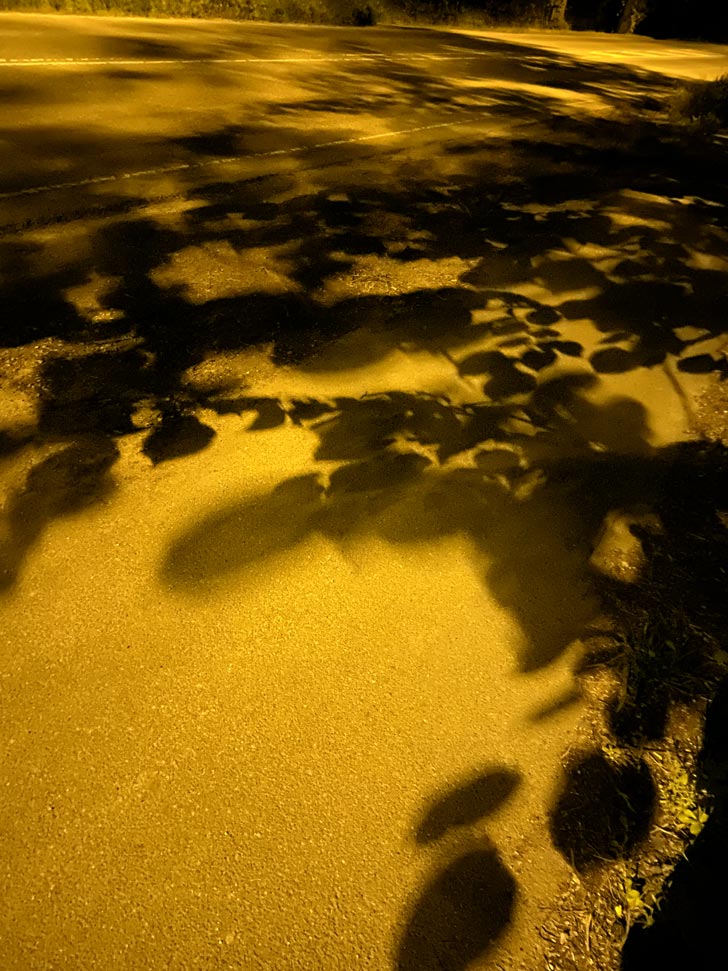
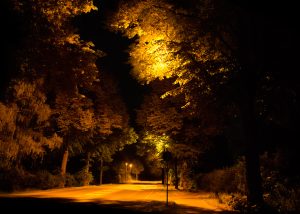
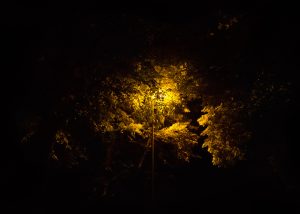
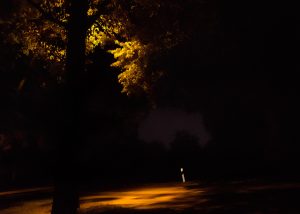
Anna Ullrich is a German visual artist working with photography, where light serves as the central motif and driving element of perception, memory, and emotion. For EVI LICHTUNGEN 2026, Ullrich presents the series “Wege,” where she examines movement and landscape, capturing both urban life and maintaining a calm and thoughtful atmosphere. The series is staged as a gallery, encouraging visitors to explore the photographic paths, explore, and linger inside the intersection of motion and stillness.
// Can you briefly introduce your artistic practice?
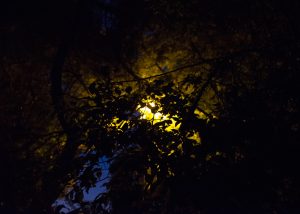
My artistic practice is based on photography as a form of slow seeing. I am not interested in depicting reality, but in creating image spaces where inner states, atmospheres, and transitions can unfold. Light is a central compositional element in my work. In the tension between light and darkness, the image space comes into being. I work in series, often over long periods of time, returning repeatedly to the same places or motifs. Waiting, reduction, silence, and repetition are essential prerequisites for the images to emerge. My increasing turn toward abstraction allows me to articulate inner experiences more precisely while leaving open spaces of projection for the viewer.
// How did photography first enter your life?
Photography entered my life very early, long before I actively worked with it. Certain images from my childhood left deep impressions on me and stayed present over time. Later, during my studies, I engaged theoretically with photography, and this profoundly shaped my understanding of the medium. In a transient world, photography appeared to me as something consoling, almost stable. Initially, it entered my practice subtly, as documentation or as a source of textures and structures. Around 2012, I began to photograph consciously and actively, after returning alone to an abandoned house I had known only through images. It was the light moving through the spaces and the presence of shadows that held me and brought me back again and again.
// Is there a key influence that shaped your approach to art?
My path toward art and photography was gradual. Since childhood, I have been searching for a language that allows me to overcome an inner speechlessness in relation to life and existence. Photography became a means of connection with the world, with others, and with myself. My work is shaped both technically and conceptually by the tension between light and darkness, and by the attempt to translate inner worlds into visual forms that do not explain, but remain experiential. Important references include artists such as Gerhard Richter, Rembrandt, Caravaggio, Bill Viola, Tracey Emin, and William Kentridge.
// How do you begin a new series?
A series often begins with an atmospheric impulse: a light, a fragment, a feeling, an inner image. The photographic act is preceded by long phases of observing and approaching. Conceptually, the series differ through themes such as silence, memory, loss, resonance, or existential transitions. Visually, they are distinguished by light treatment, spatial relations, proximity and distance, fragmentation, and by what is revealed or consciously withheld.
// Which processes are central to your work?
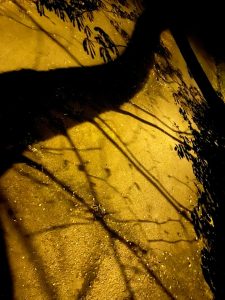
My work is shaped by slow, repetitive wanderings through spaces, usually alone and deliberately undisturbed. I work with a camera and tripod, sometimes using a flashlight as the only additional light. Many images are created during the blue hour or in darkness, when time seems to expand and perception intensifies. Repetition and restraint are essential. The photographic process is not an intervention, but a careful approach. When people appear in my work, the images are based on trust, proximity, and shared time. The camera becomes a medium of silent co-presence.
// Has your vision changed over time?
Yes, my work has become more open and reduced. Earlier series were more concrete and painterly, oriented toward portraits and still lifes. Over time, my focus shifted from individual motifs to states, atmospheres, and in-between spaces. Fragmentation, reduction, and deliberate encryption have become central elements of my visual language. This growing abstraction allows inner experiences to be expressed more precisely while opening the work to the viewer.
// What are you currently working on?
I am currently interested in how photography can function as an experiential space beyond the single image, for example through larger formats or installative modes of presentation. Existing series remain present and can be expanded. At the moment, I am also working conceptually on a new series centered on transience, shaped by the simultaneous experience of accompanying someone during the dying process and the birth of my daughter. This coexistence of becoming and disappearing forms the emotional core of the work. I am interested in how death, as a form of closure, can be addressed photographically without being too direct.