Visiting EVI LICHTUNGEN Hildesheim 2026
REVIEW by Bettina Pelz
PUBLSIHED 6 FEB 2026
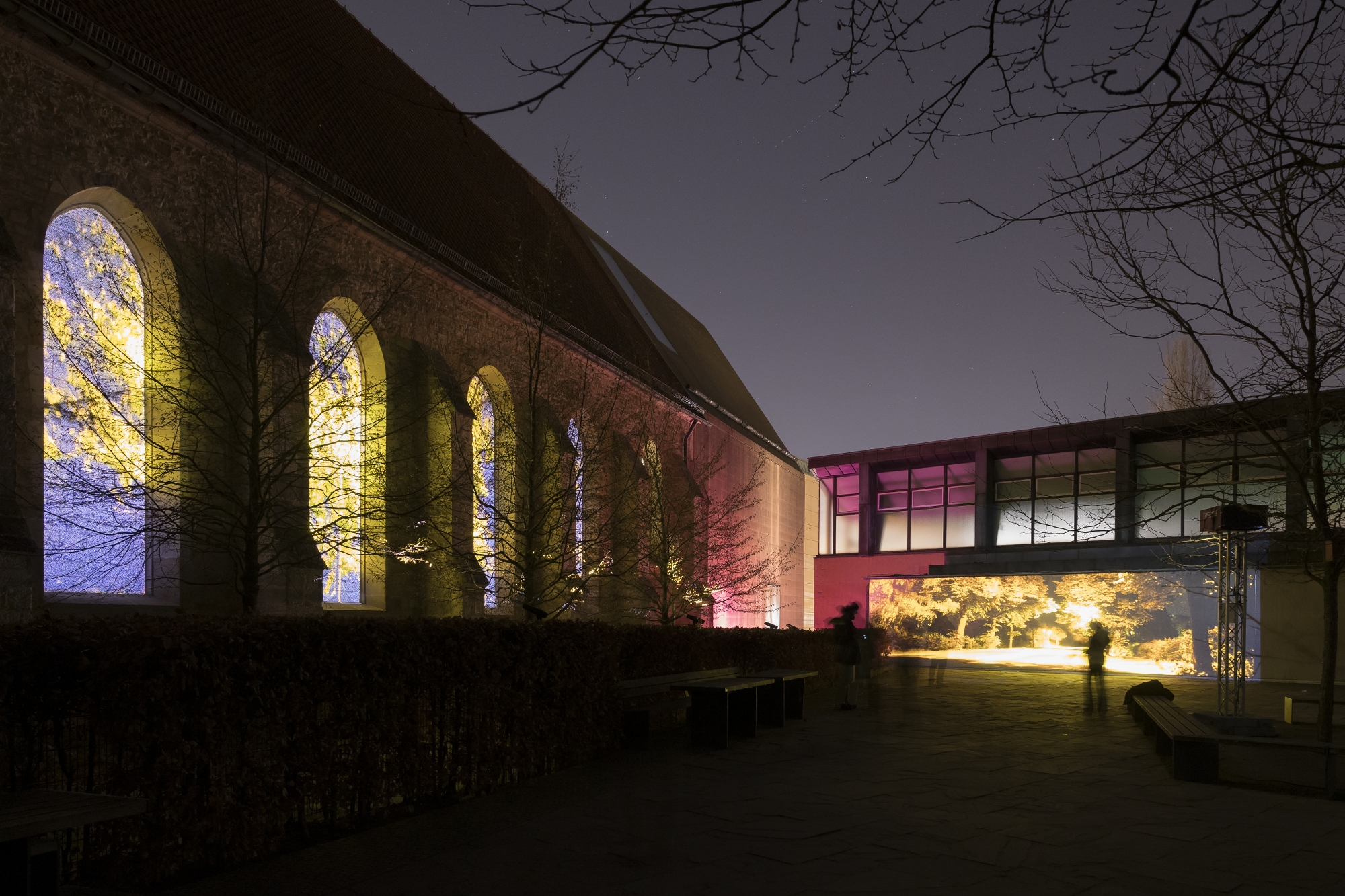
A bit hidden, tucked behind the Dom-museum, so that we almost missed it: Anna Ullrich’s “Wege” was a quiet intervention. Her projection-based intervention was not spectacular; instead, it integrated seamlessly into the site’s architecture. The courtyard the artwork inhabited was shaped by a palimpsest of eras since the city’s founding, with architectural fragments from the dom-complex’ historic façades to 20th‑century school buildings.
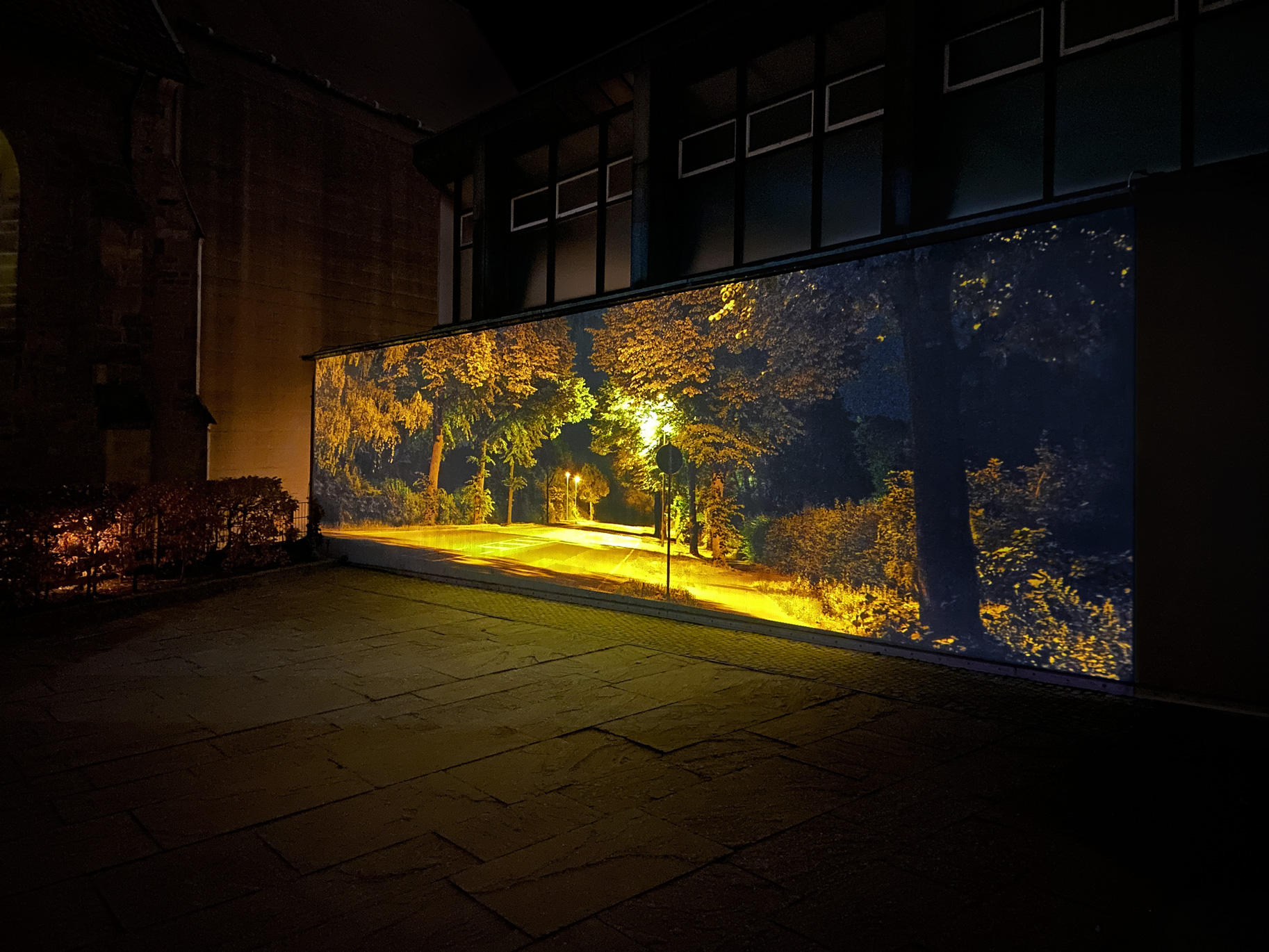
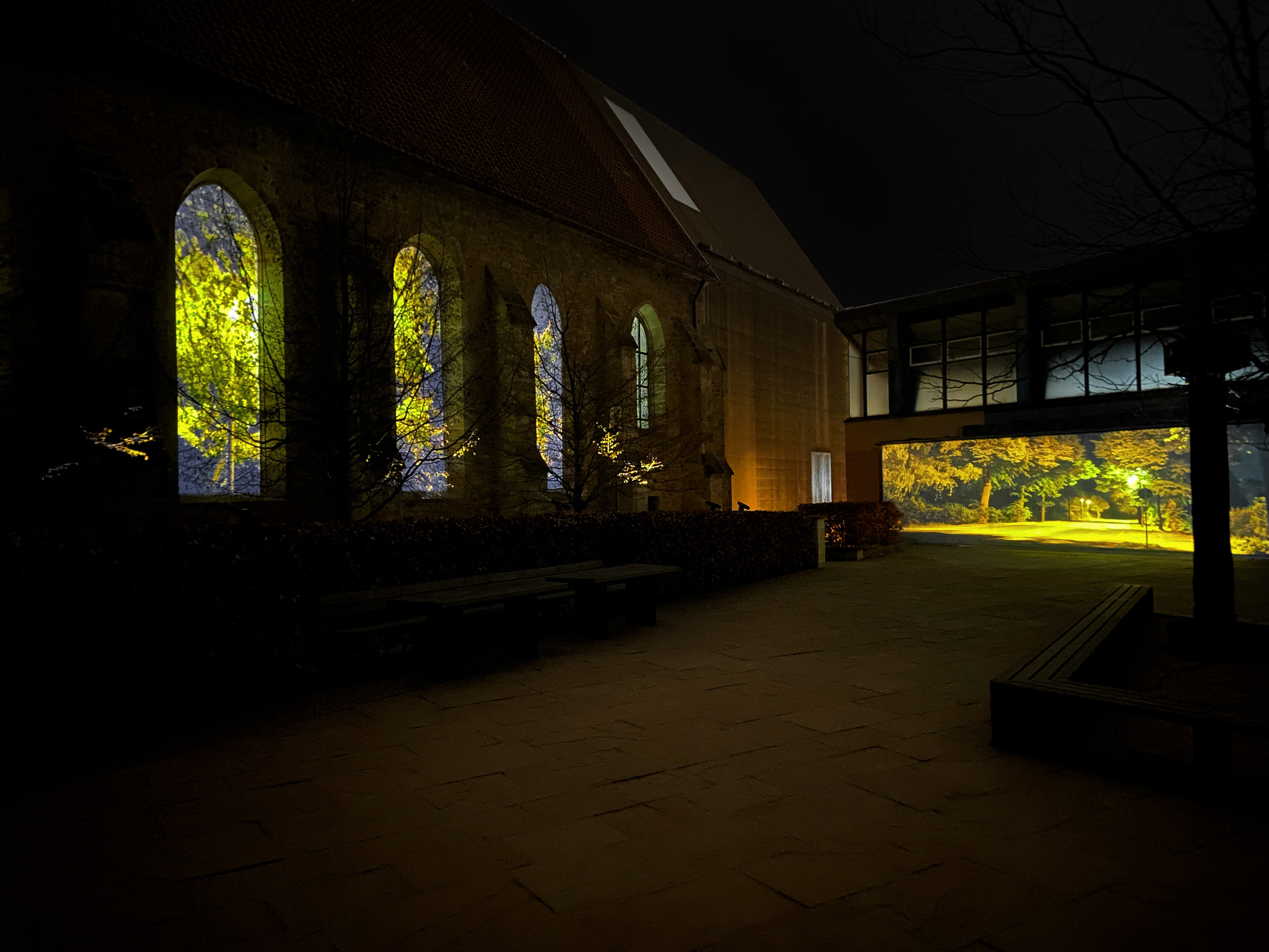
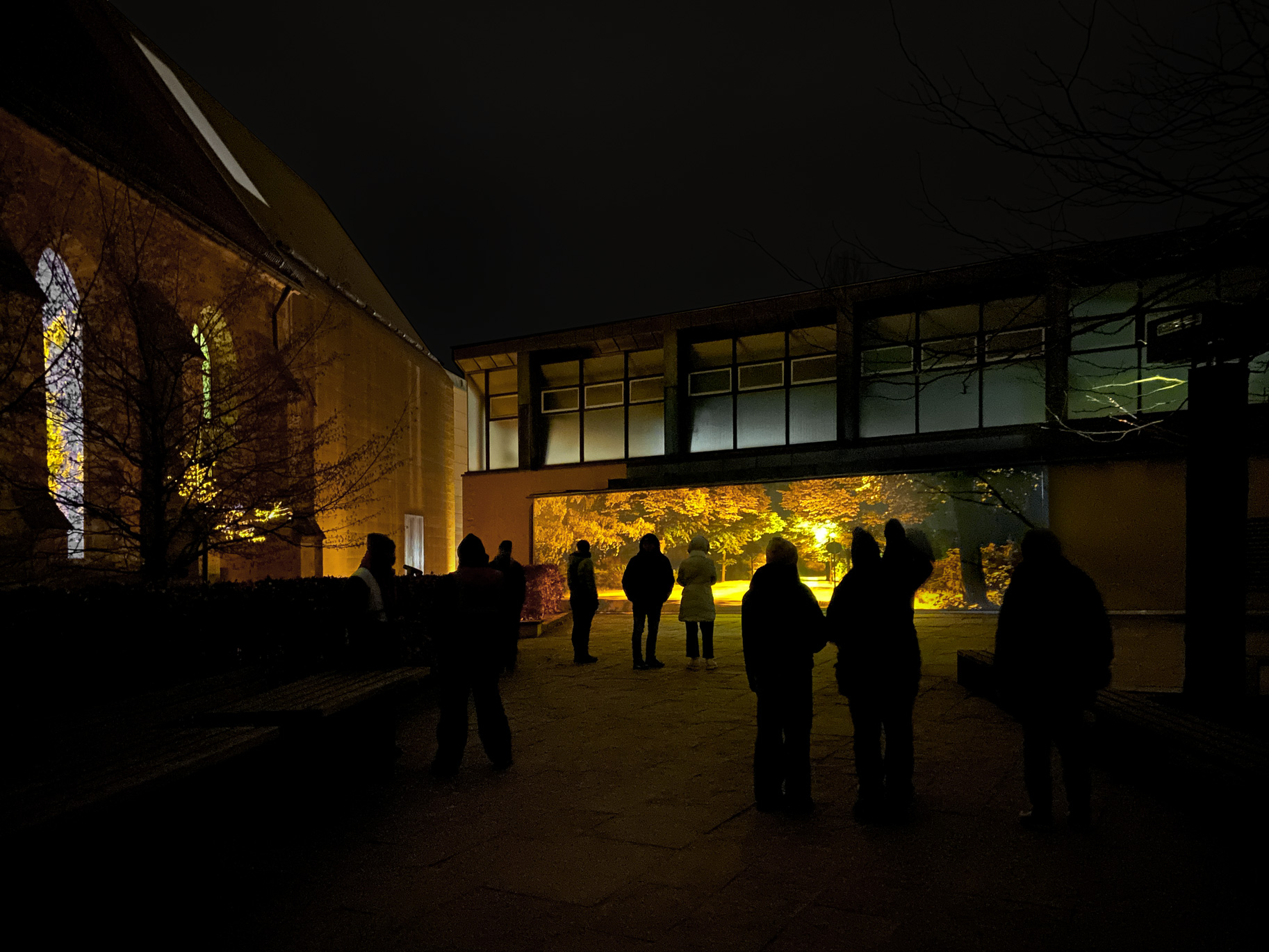
Developed site-specifically, the intervention “Wege” consisted of a series of precisely mapped projections of still photographs onto windows and walls. The artist’s careful calibration of surfaces and apertures generated an atmosphere first before it revealed its qualities as a display. The only luminous elements were the projections themselves, which framed the courtyard, drawing attention not only to the images but to the very act of seeing.
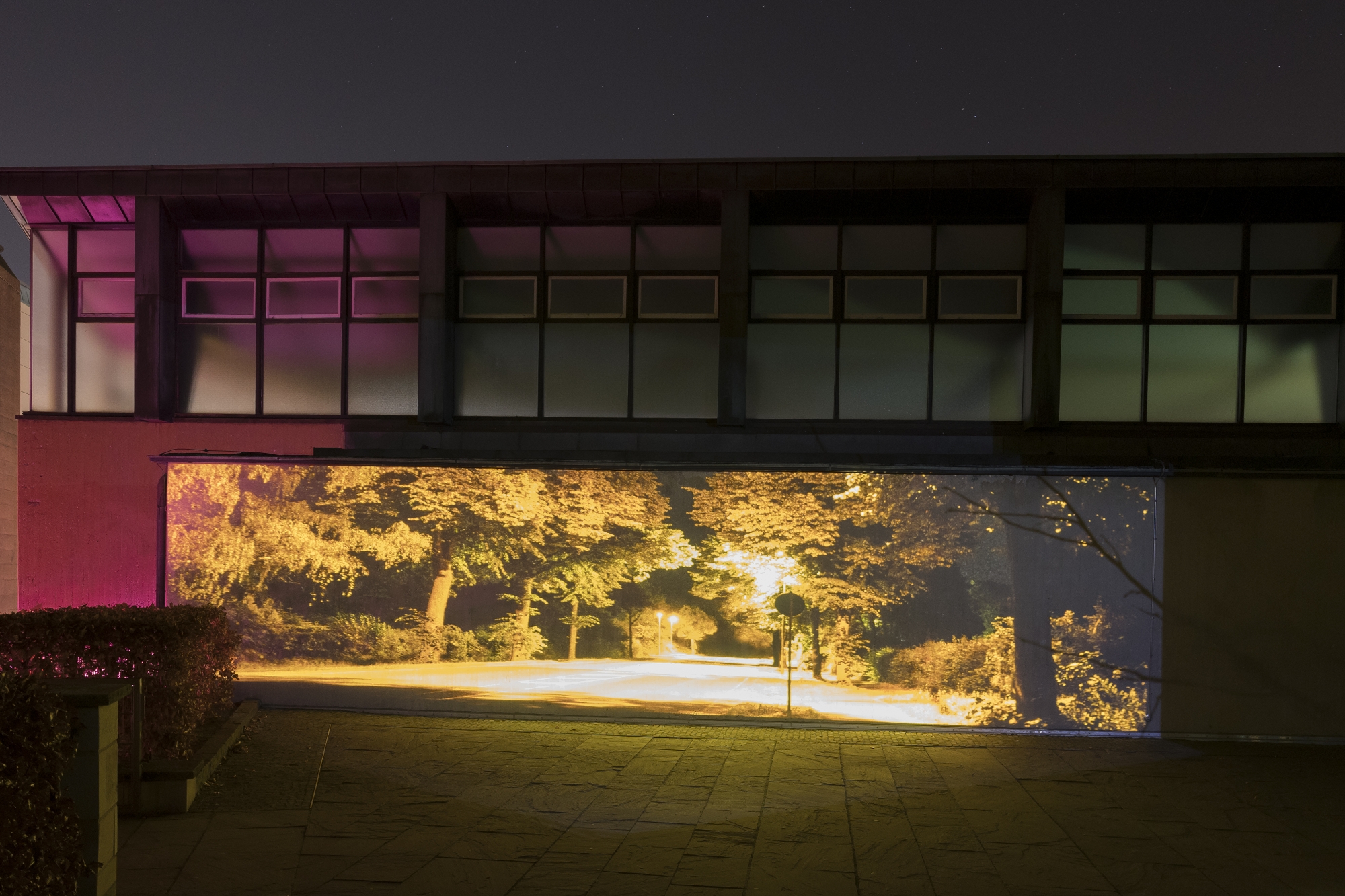
The Artwork’s Components
On one side of the yard, a large still projection was cast onto the school’s façade by a digital projector. It shows a yellowish‑grey artificial light illuminating a parkway. The projection stretched from floor level to eave height. The path appeared both inviting and ambiguous, a route that leads somewhere and nowhere at once.
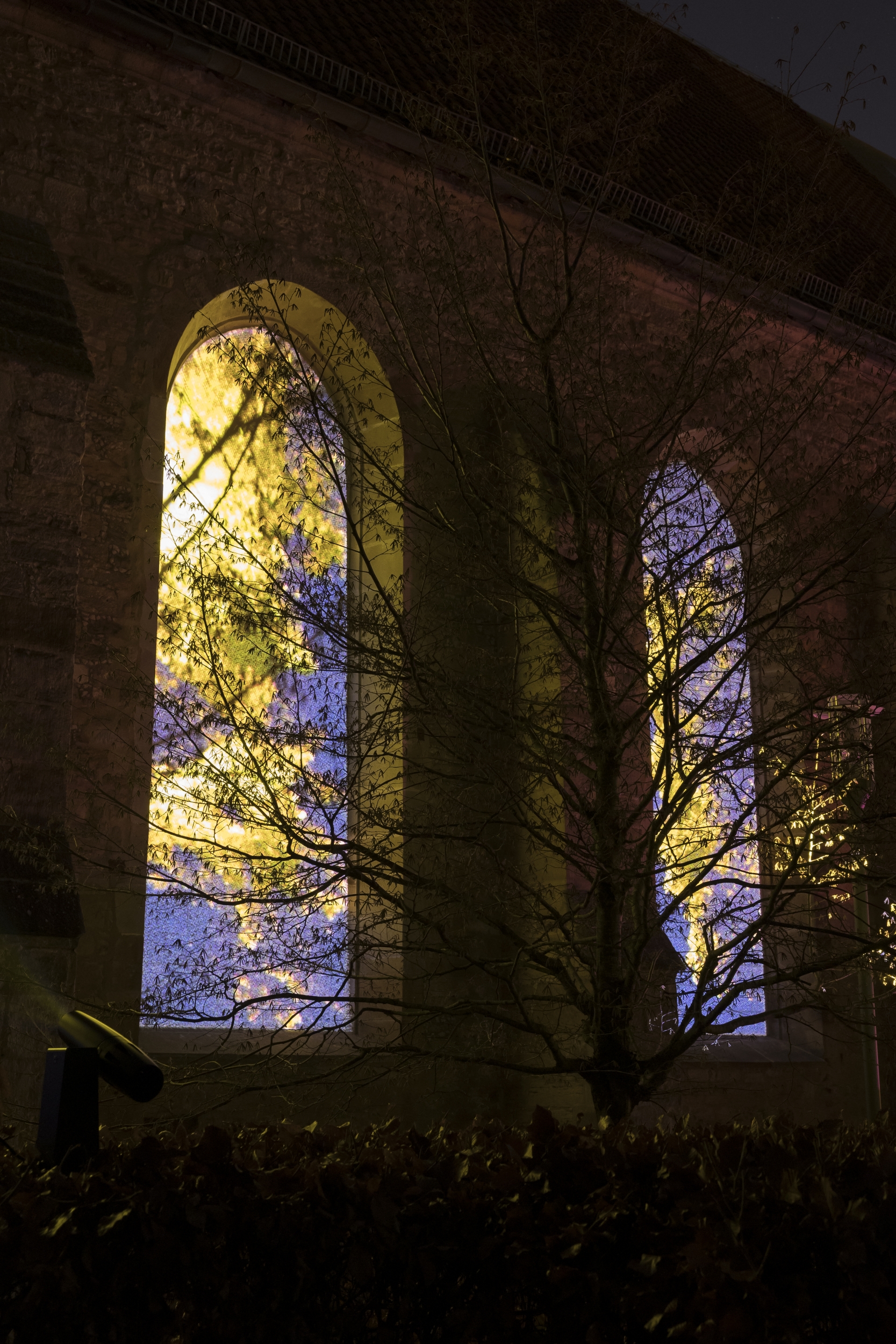
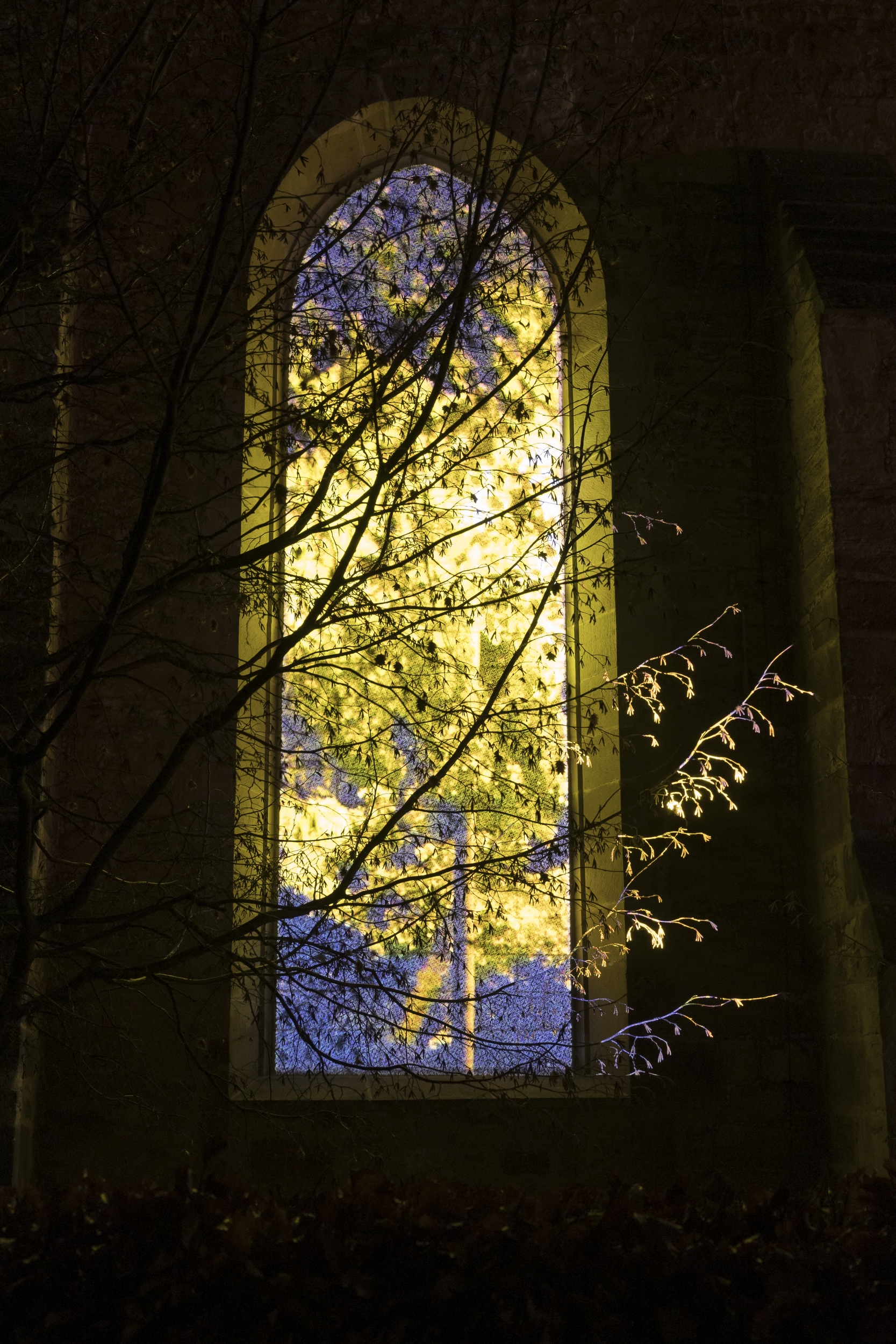
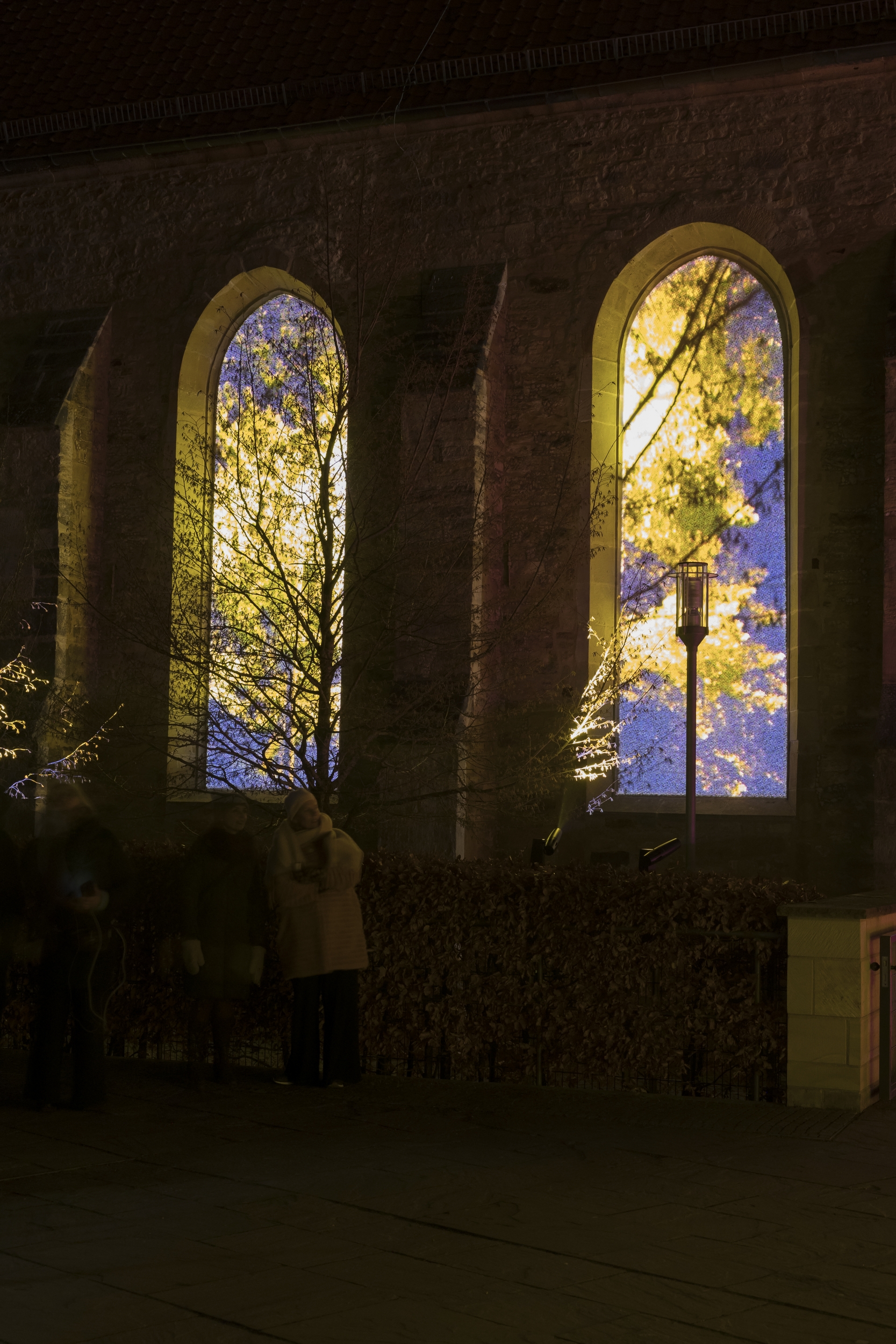
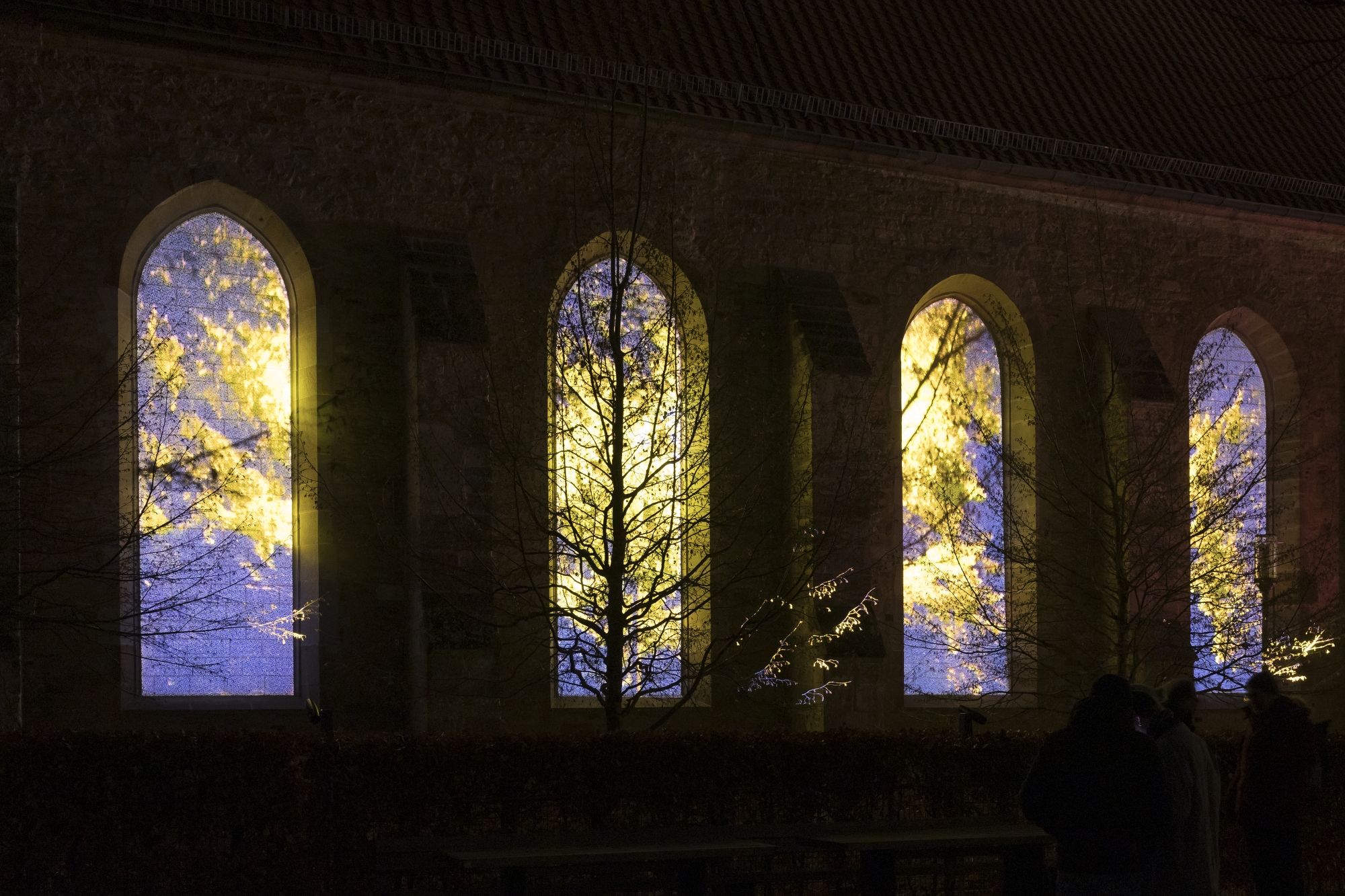
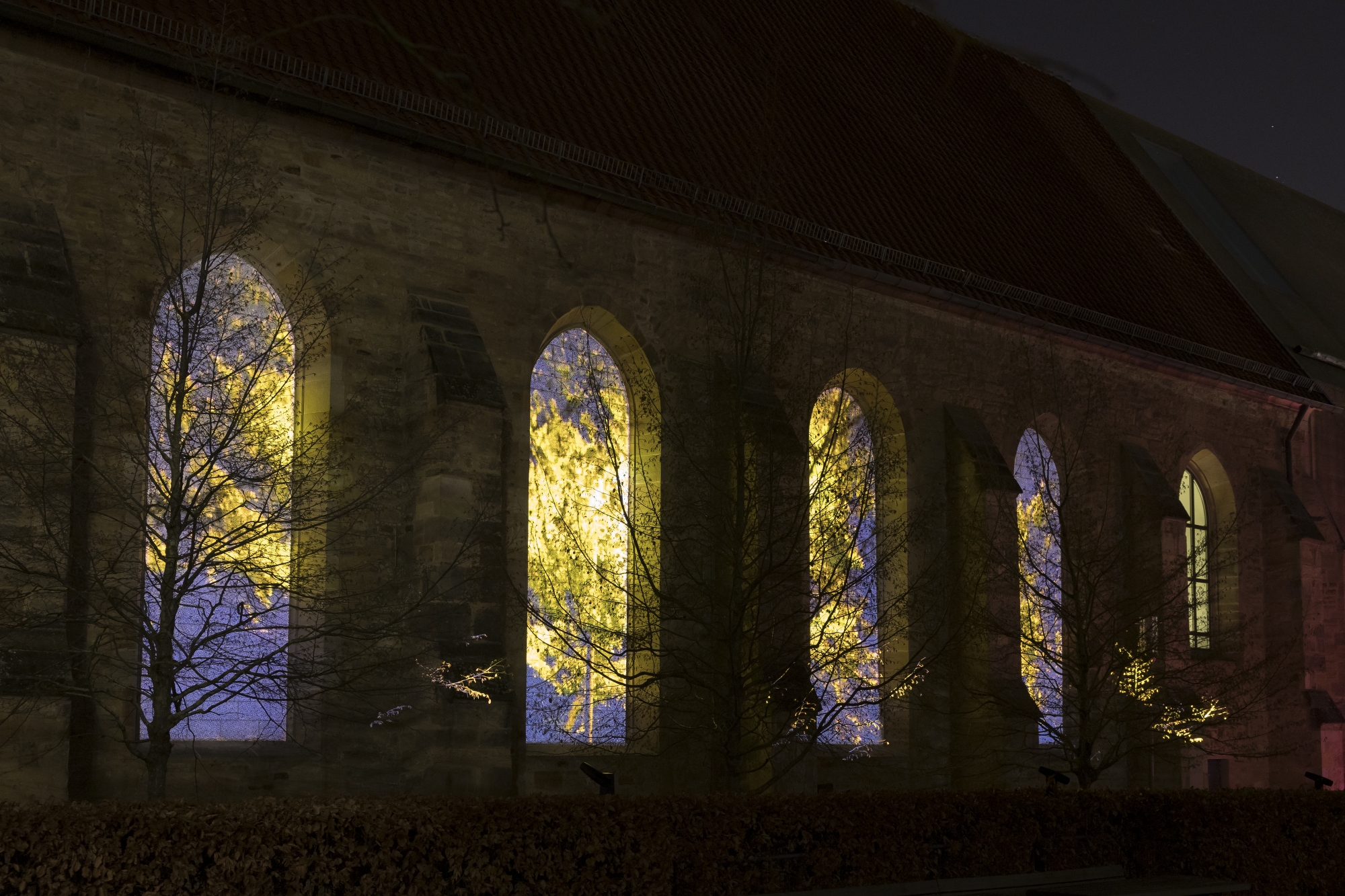
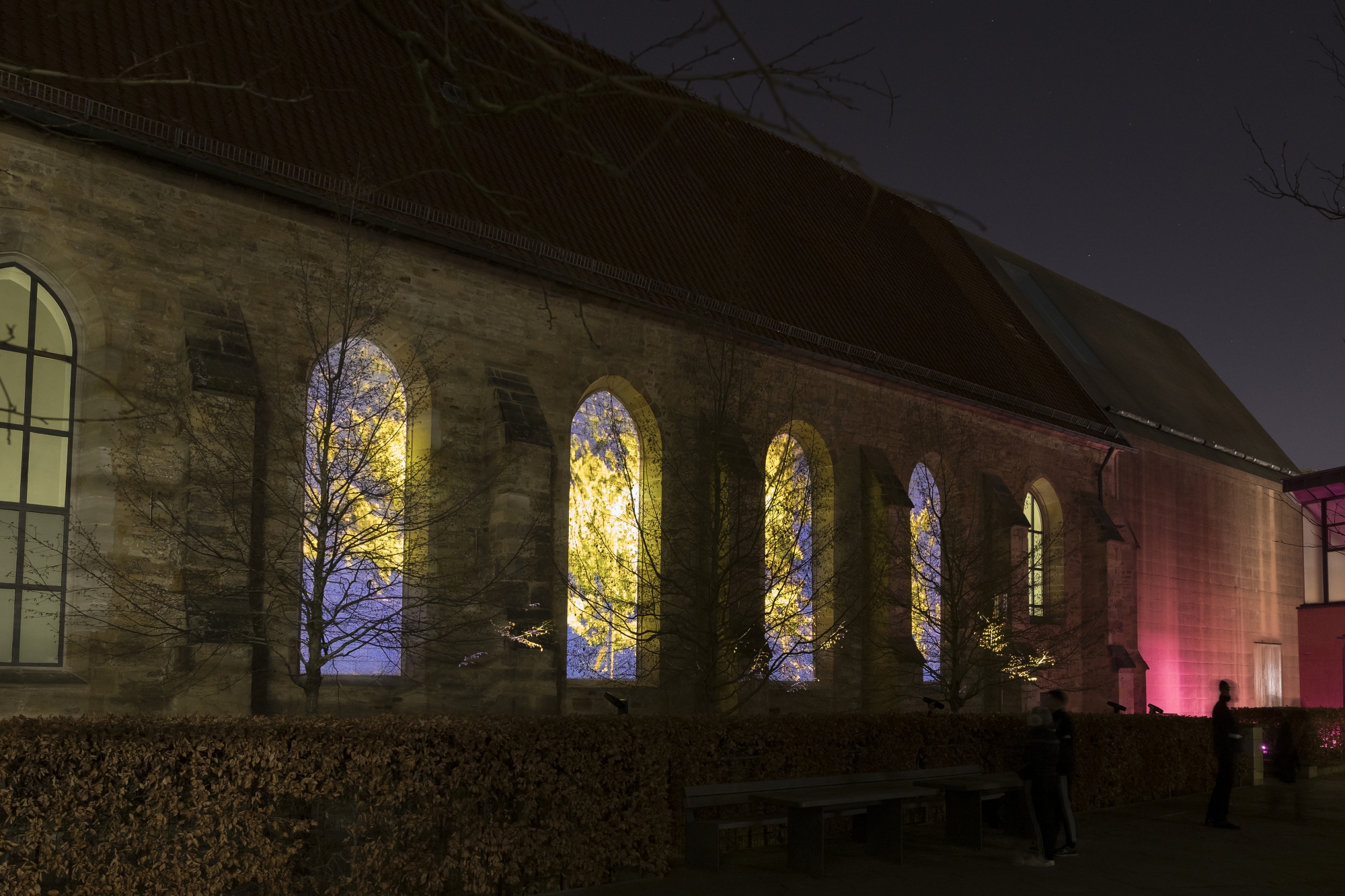
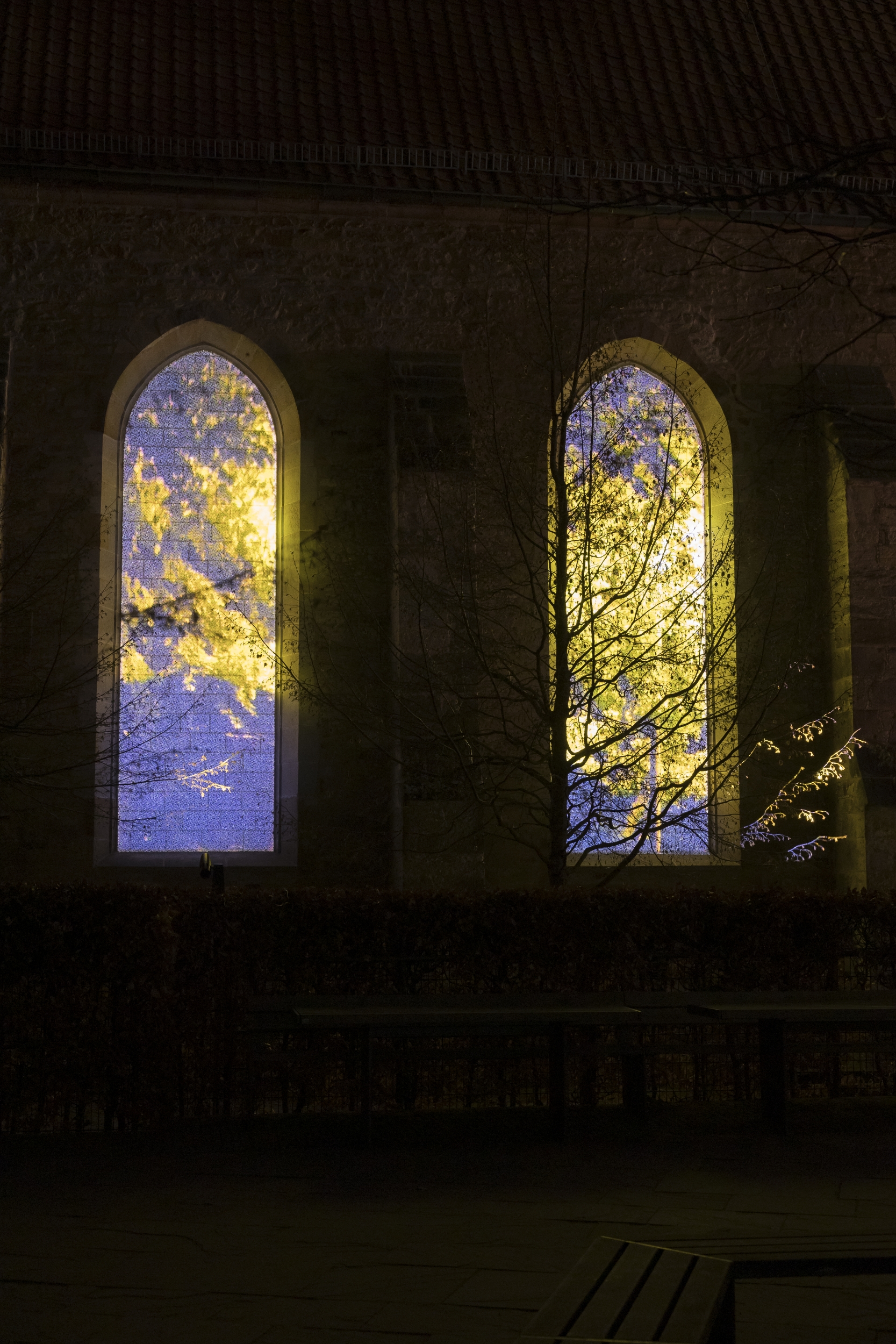
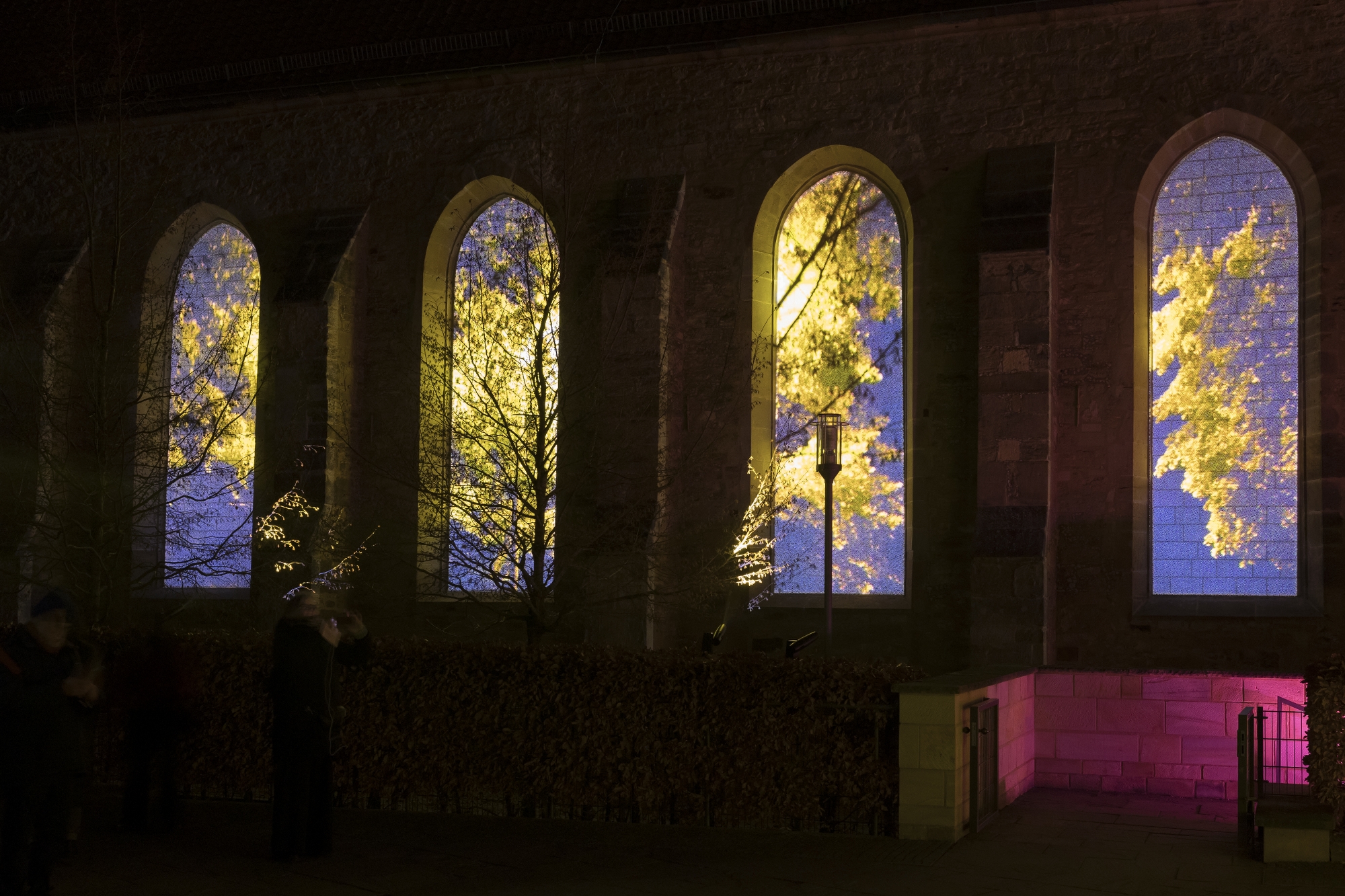
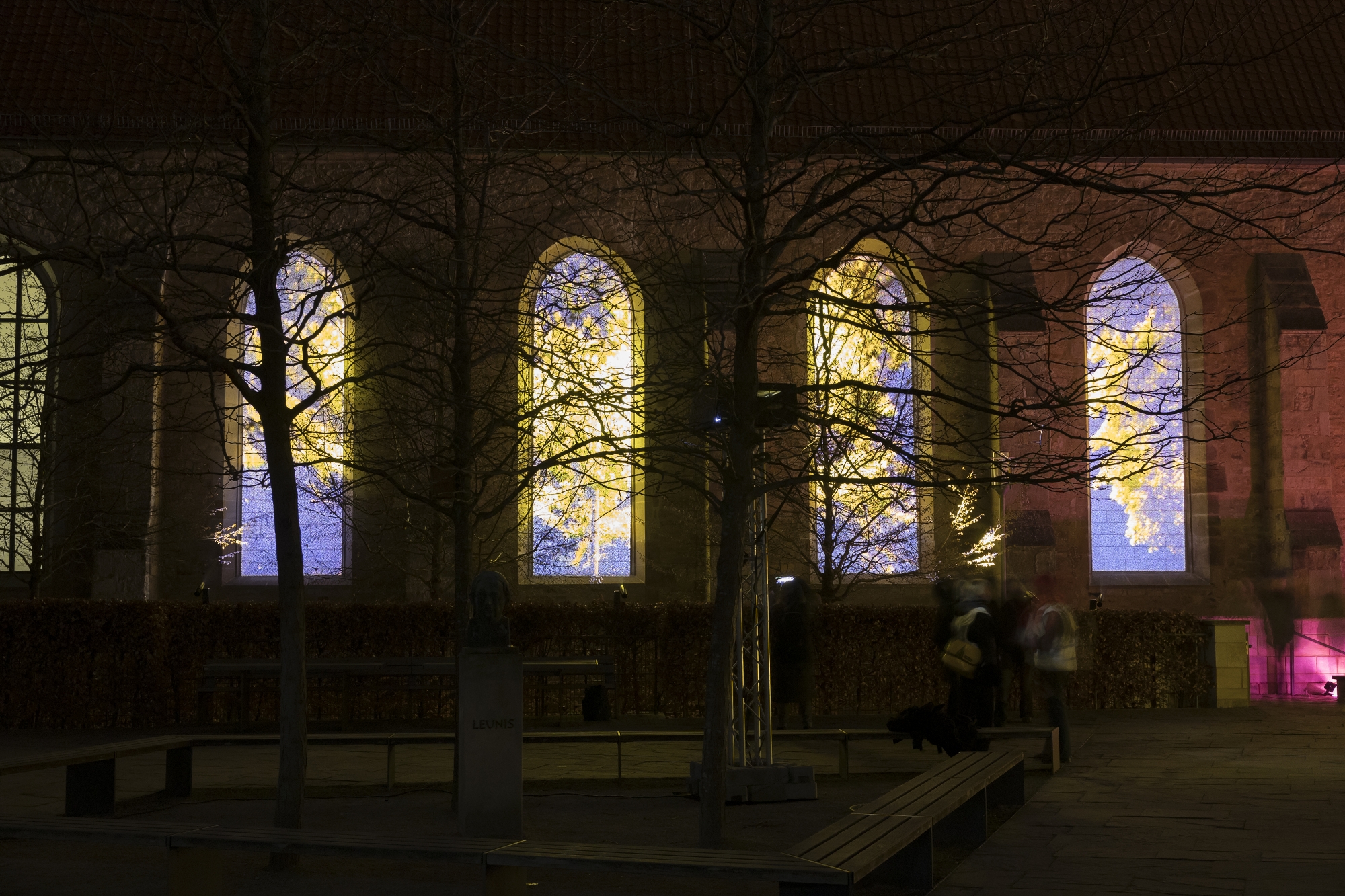
Embedded in the windows of the Dom-museum, a series of smaller projections was realized with analog gobo projectors. They depicted natural light reflected off green leaves and trees, resulting in a softer, more diffuse luminosity.
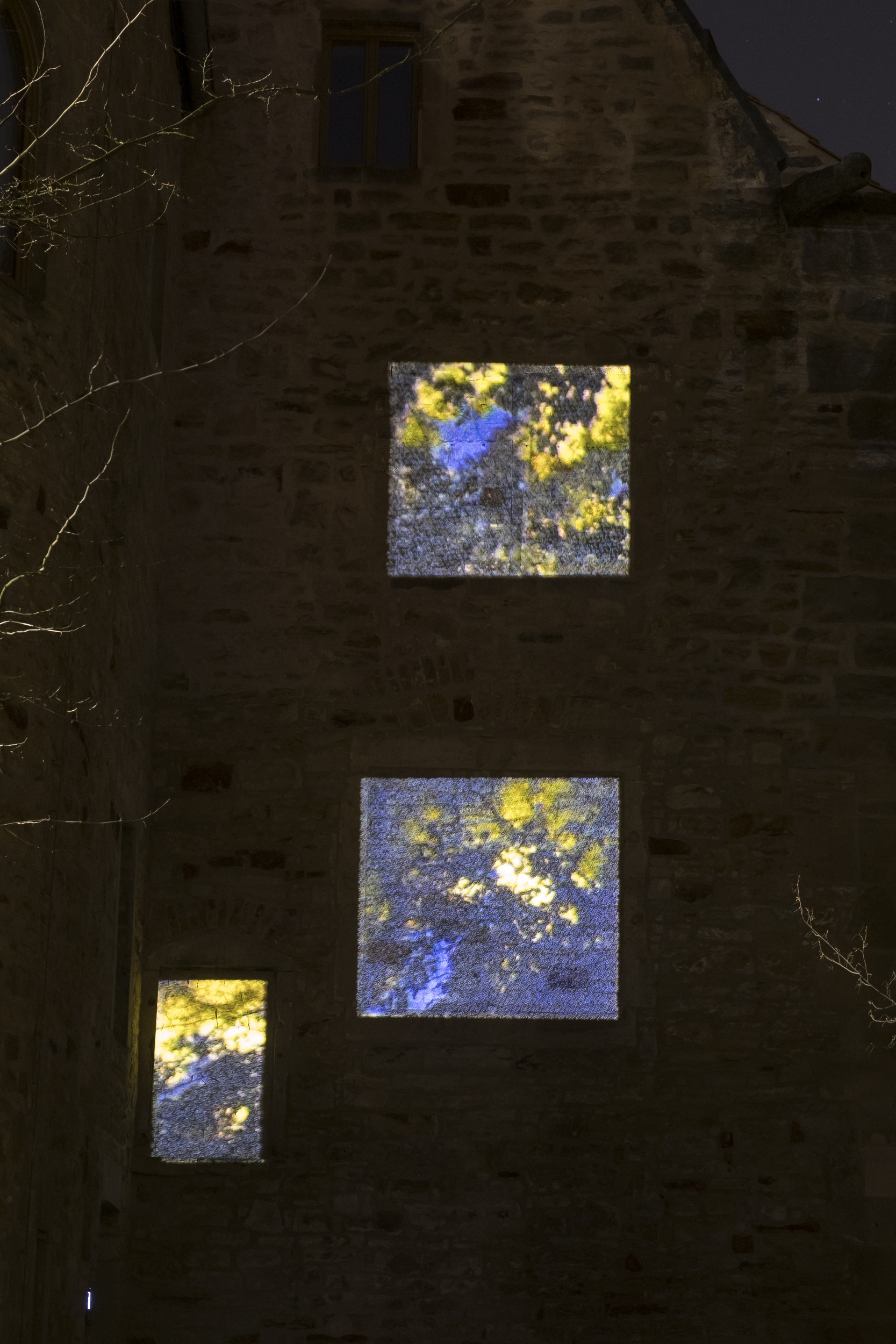
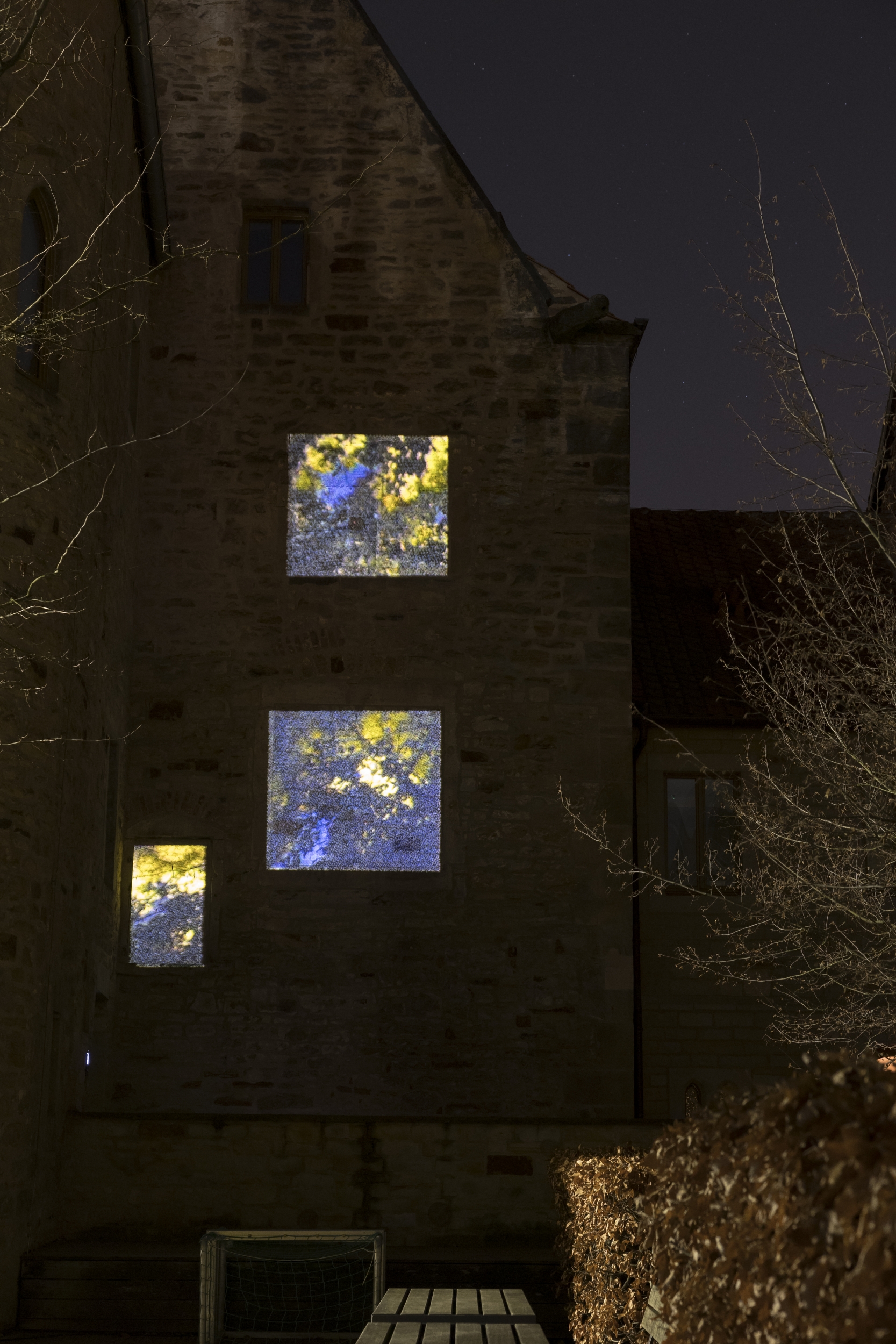
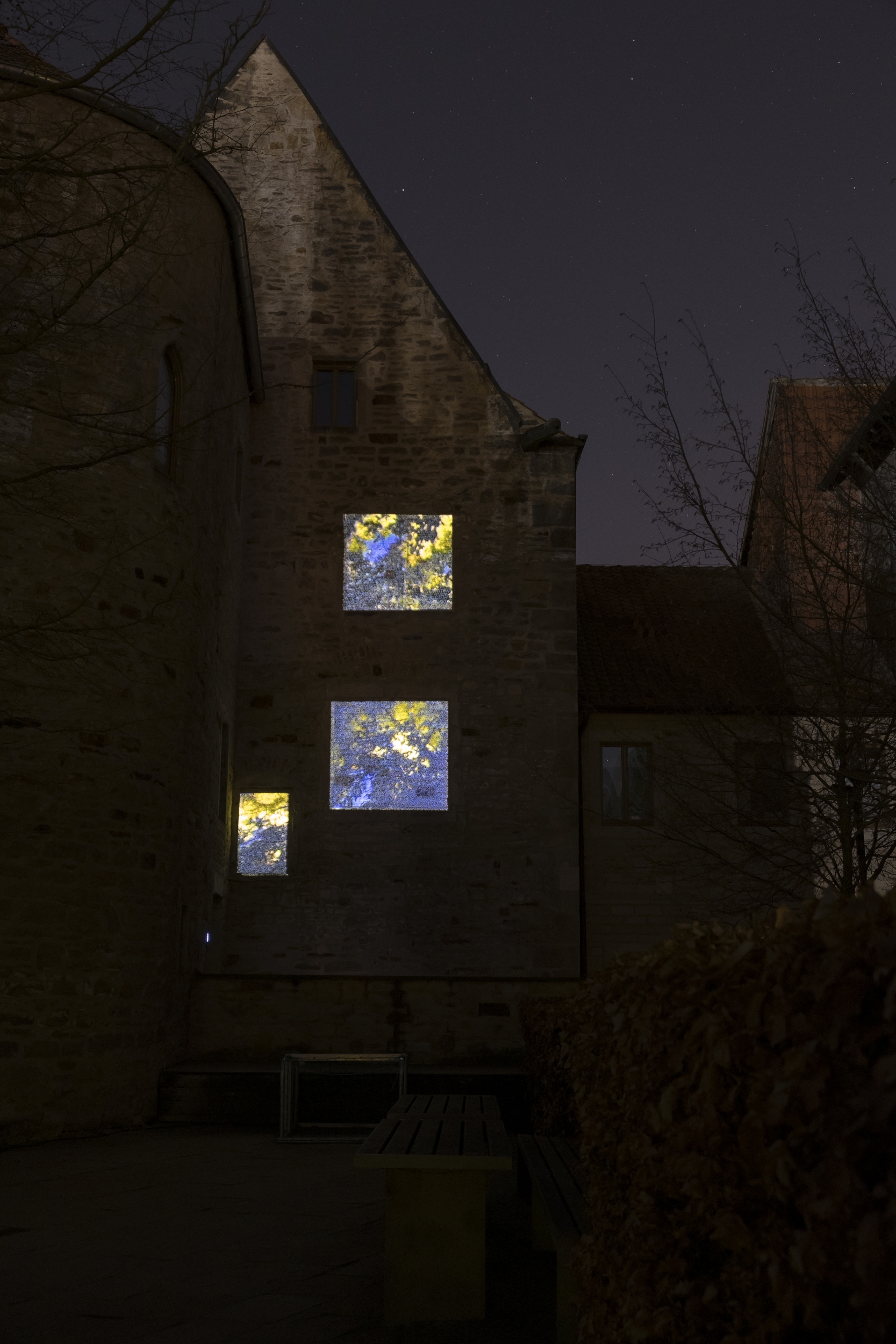
In addition, three smaller projections were added to a blind wall, matching the openings of closed windows, while their frames remained. From different viewing points, the shadows of trees mingled with the imagery. The interplay between the site and the projections was seamlessly woven, leaving visitors in awe.
The work’s modesty was part of its strength. With Anna’s intervention emerged a here‑and‑now that echoes the etymology of “photography” itself: from Greek “phōs”(light) and “graphē”(drawing or writing). The projections did not overwrite the architecture; they inhabited it, revealed its qualities. The schoolyard, usually a daytime space, became at night a contemplative field, a place where light and shadow renegotiated visibility, function, and use.
Working Site- and Context-Specific
Anna’s intervention demonstrated a remarkable sensitivity to the site’s design, treating the schoolyard as a layered, historically charged space that demands careful negotiation. The placement of each projection respected the existing architecture, avoided visual overload, or thematic imposition. The choice of still images over moving projections, and of subdued, atmospheric lighting over high‑contrast spectacle, underscored a deliberate restraint that aligns with the quiet, contemplative character of the Dom‑complex. This sensitivity extended to the temporal rhythm of the experience: the darkness of the courtyard, the slow adaptation of the viewer’s eyes contributed to a design that felt unhurried and immersive, and invited visitors to wander through the space.
About the Conceptual Framework
Anna’s work here is about presence: a drawing with light that traces paths, both physical and psychological, through a space that is itself a melting pot of history and institution. In the darkness, the projections launched a silent dialogue between the visible and the withheld.
Anna’s approach to “Wege” is consistent with her broader trajectory. Living and working in Hildesheim, she studied graphic design at the University of Applied Sciences and Arts (HAWK) and began photographing around 2012, drawn again and again by how light moves through spaces and by the presence of shadows. Light, shadow, and time became central elements in her practice, always exploring the tension field between what renders visible and what remains withheld. While her early series were more concrete and painterly, oriented toward portraits and still lifes, her focus has gradually shifted from individual motifs to states, situations, and atmospheres.
About the Visual Vocabulary
The motifs of light, trees, and leaves in “Wege” function as an archaic, almost elemental vocabulary, tapping into a long‑standing visual and symbolic tradition that links nature, light, and the sacred. Trees and foliage have long served as metaphors for life and growth, while light connotes the passage of time and also revelation, presence, and the divine. Anna’s projections evoke a primordial sense of thresholds between the material and the immaterial dimension. In the context of the Dom‑complex, with its medieval cloister and thousand‑year‑old rosebush, these motifs resonate with the site’s own layered history, suggesting a continuity between ancient symbolic forms and contemporary artistic practice.
But Anna’s choice of motifs – light, trees, leaves, parkways – could be read as almost too simple, bordering on the cliché. Pathways, foliage, and luminous glades are among the most conventional visual tropes in photography, easily evoking a sense of visual pleasure and spiritual well‑being. Yet it is precisely this apparent simplicity that becomes critical, as it refuses to complicate the imagery with overt symbolism or narrative. The work did not offer a dramatic revelation or a complex iconography; instead, it insists on a minimal vocabulary that feels almost banal, forcing attention away from the subject matter and toward the conditions of perception itself. In this sense, the simplicity of the motifs is not a limitation but a strategy, a way of stripping back the spectacle and foregrounding the quiet, durational act of seeing.
Curatorial Leitmotif “Resonance”
Anna’s “Wege” resonated closely with the festival’s theme, “Licht, Kunst, Mensch, Ort in Beziehung,” by staging a relational encounter among site and light, artwork, and viewer. The work insisted on a slow, bodily form of resonance: the eye adjusting to darkness, the visitor stepping closer or further back, the images seem to change over time, while they don’t. In this way, “Wege” activated a field of relations of site and sight, light and art, where each element modulates the others. Viewers were participants in a delicate feedback loop in which the artwork’s minimal motifs, the site’s historical weight, and the viewer’s perception continually re-calibrate one another. In this sense, the piece becomes a subtle model of what “Resonanz” can mean in public space: not a loud, singular statement, but a sustained, almost acoustic attunement between light, art, place, and people.
Festival’s Focus on Still Photography
Three out of twelve installations – 25% of the exhibition program – were explicitly photography‑based, a significant proportion that underscores how central the photographic image is to the festival’s understanding of light. In a context otherwise dominated by mapping projections, LEDs, and kinetic light sculptures, these feature these works artistic research rooted in the materiality of the image.
Anna Ullrich’s “Wege” enters into a nuanced dialogue with the other photography‑based projects in the EVI LICHTUNGEN program, offering a more restrained counterpoint to works that amplify photographic material through large‑scale or animated projection.
The “SKRFF_ology” project by Corrie Francis Parks and Daniel Nuderscher was built from documentation imagery of a microscopic urban intervention. Layers of graffiti and paint were stripped back to reveal layers of urban history, and then re‑staged as an animated archive projected onto a tunnel wall. Here, photography functioned as raw material for a dynamic, time‑based narrative of erasure and exposure. In contrast, Anna treats photography not as a source for animation or archival revelation but as a spatial and atmospheric medium: her still projections construct image‑spaces carried by light to be explored by moving in space and by reflecting on the process of seeing.
With the videography “Zwischen Räumen” Gudrun Barenbrock transformed local documentary imagery into expansive projections that engulf several façades, while Anna keeps her images still, contained, and tightly coupled to the specific surfaces of the Mariano‑Josephinum courtyard. Her work refuses the spectacle of motion and scale, instead insisting on a slower, more intimate form of looking that aligns with the site’s quiet atmosphere.
Across the program, these different uses of photographic material as in Anna Ullrich’s mapped photographies, Corrie Francis Parks and Daniel Nuderscher’s animated urban archaeology, and Gudrun Barenbrock’s monumental video‑projections reveal how a focus on photography within a festival of light is particularly compelling. It returns the medium to its literal roots – photography as drawing with light. By staging photographs as projections, light installations, or site‑specific interventions, photography is presented not only as a record of light but as an active, spatial practice that resonates with architecture, urban context, and the bodily experience of the viewer. This foregrounding of photography thus deepens the festival’s engagement with its own theme featuring “light” as material, medium and subject.
LINKS
anna-ullrich.de
evilichtungen.de/anna-ullrich
bettinapelz.de